
Not AI built from scratch.AI built around your business
IWITS builds with its own business-proven AI systems. Our broad business perspective enables us to effectively design, customize, and implement AI services specifically for your business.

LLM's we use
Our working principles
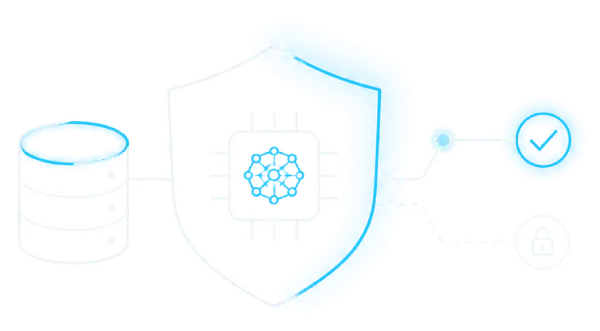
Data security: the first priority
We determine what can be processed through public AI models and what must remain within a private LLM or strictly controlled infrastructure.
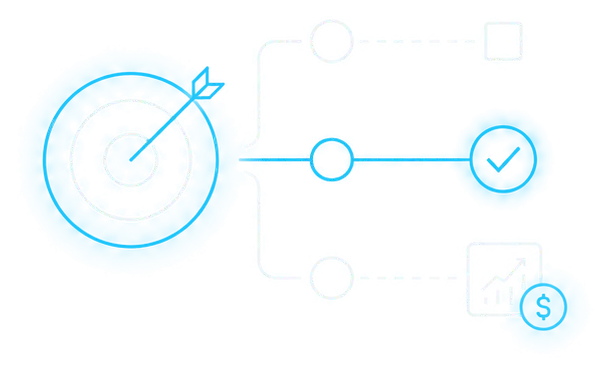
AI only where it is useful and cost-effective
We automate only the processes where AI creates a clear operational advantage for the business.
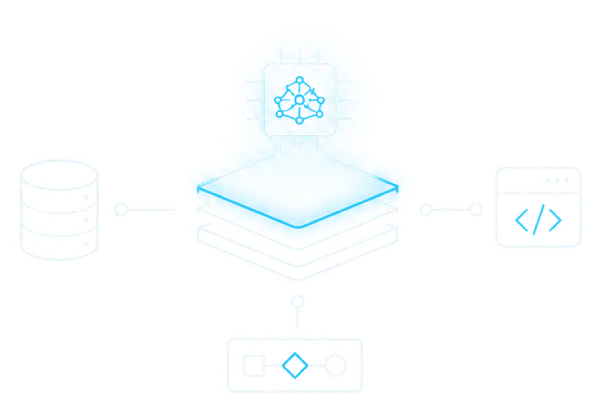
Infrastructure-first approach
Our AI services are customized to your complete operational infrastructure.
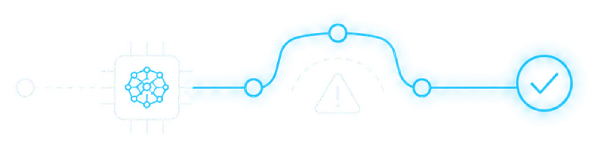
Solving non-standard challenges
The IWITS team has extensive experience working with the technical and platform constraints of global IT products. We apply this knowledge to the systems we develop for our clients, enabling them to earn more and work more easily.
IWITS' areas of expertise
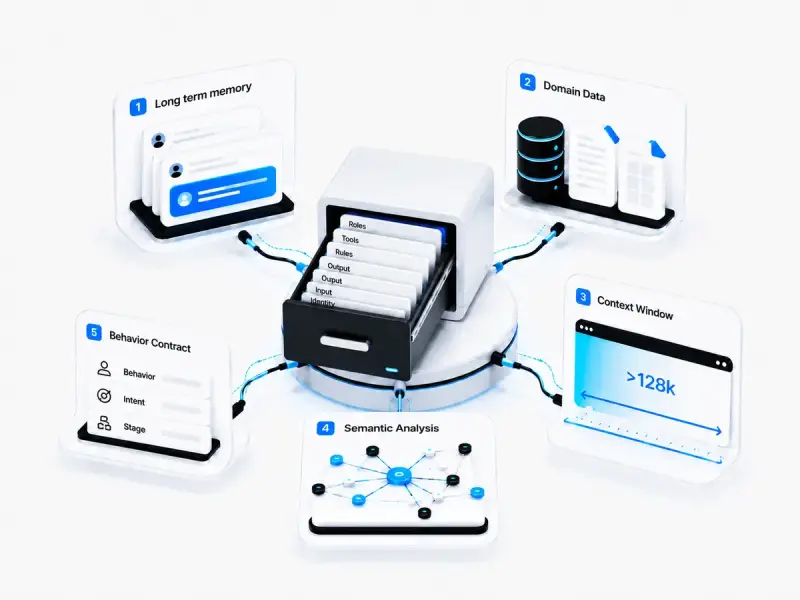
Context Engineering
Context engineering is the design of a controlled environment where AI receives not just a prompt, but a strictly controlled information set (including domain knowledge, memory, tools, and behavioral constraints). The goal of a context engineer is to create a resilient AI system with predictable behavior in long, multi-step scenarios.
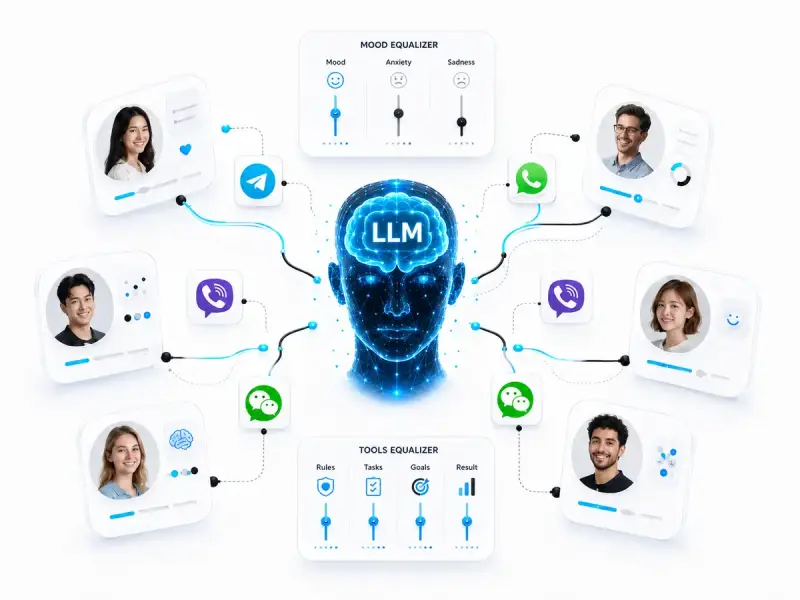
Social&Identity AI Modelling
Social & Identity AI Modeling involves modeling human behavioral functions alongside psychological and communication traits. It includes approaches such as decision-making simulation and cognitive modeling.
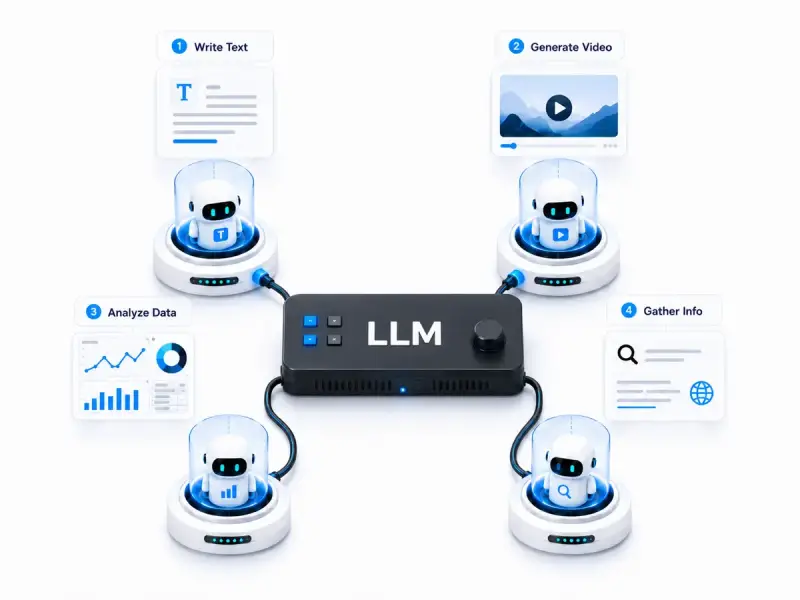
Development of Harness-Based Agent Networks
Harness-based agent networks are built around a control layer that connects LLM agents, tools, memory, policies, states, checks, and tracing into a single controlled system. These groups of networks make it possible to manage complete standalone systems in accordance with agent policies.
Consultation
Your automation goals.
Our expert advice.
Our expert advice.
Book a consultation to explore the best automation solutions for your business.
Technologies we work with
A curated suite of best-in-class technologies powering intelligent, reliable, and scalable AI systems.
LangGraphLangChainOpenAI Agents SDK
LlamaIndexLlamaParseDocling
QdrantWeaviateMilvusOpenSearch
Neo4jGraphRAGNetworkX
InstructorPydanticAIOutlinesJSON Schema
RagasDeepEvalLangfusePhoenixOpenTelemetry
vLLMSGLangTensorRT-LLMllama.cppOllama
AsteriskFreeSWITCHKamailioWebRTCSIPRTPElevenLabs
TesseractPaddleOCRLayoutLMv3DonutTable Transformer
AgentScopeMicrosoft Agent FrameworkMesaAutoGen
Development and implementation methodology
We build an AI service not as a standalone function layered on top of a business, but as a technology framework embedded in the client’s existing processes, data, roles, communication channels, and infrastructure.
01Process Analysis
At the first stage, the process is analyzed: who participates in the operation, what data is used, and where operational inefficiencies occur. Interaction channels are documented separately across all digital touchpoints.
Stage outcome: A process map highlighting the areas where AI can genuinely improve overall business performance.
02Technology Selection
Once AI applicability has been confirmed, the task is matched to our company's existing technology base, which consists of proven modular components.
This makes it possible to avoid starting development from scratch or assembling a solution from random external tools. The base architecture is built on technical components that have already been tested.
03Architecture Design
At the architecture stage, the blueprint for the future solution is created. The AI system is designed not as a “model with a prompt,” but as a controlled system with multiple layers of control. The model is responsible for only part of the logic; the remaining components handle all supporting operational functions.
04Data Security and Deployment Model
Before development begins, we determine which data can be processed through public AI models and which must pass through a private environment. Access boundaries, user roles, and requirements for storage, logging, transfer, and processing are defined for each data type.
The deployment model is selected based on security and performance requirements.
05Customization
At this stage, ready-made technical components are adapted to the specific business using customized business logic and configuration settings.
06System Integration
The AI service is connected to existing operational systems rather than artificially replacing them. The integration layer connects AI logic with all relevant enterprise systems and data sources.
07Testing and Validation
Before launch, the system is tested using test datasets and real-world scenarios provided by the client. All qualitative and quantitative metrics defined during architecture design and the selection of the data handling environment are checked.
08Deployment and Rollout
Deployment is carried out in stages: first, a technical prototype in a limited environment; then, a pilot using real data with a limited set of users, scenarios, or processes. Once stability is confirmed, the system is moved to production.
09Monitoring and Optimization
Our company continues to monitor and manage the AI service for a defined period after implementation. Key performance indicators and behavioral deviations are tracked.
10Monitoring, quality management, and system evolution
For a certain period after implementation, the AI service remains monitored and managed by our company. Errors, latency, cost, response quality, and deviations from expected behavior are tracked.
Trusted to build AI systems that work in production
We combine deep AI expertise with engineering discipline to deliver reliable, scalable solutions that create real business impact today and tomorrow.
- 15+
- industries use our products
- 80%+
- clients reorder automation
- 97%
- pilot-to-production rate
- 60+
- AI systems delivered