
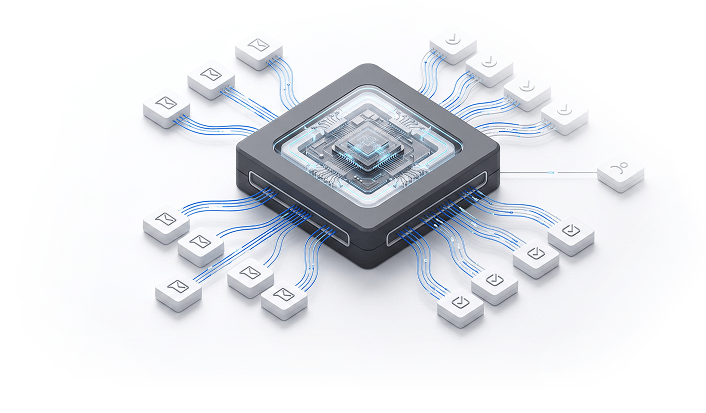
PBX, SIP trunk, VoIP & available WhatsApp Business Calling interfaces
Automate Human-Like Calls at Scale
Our WhatsApp & SIP AI Agents handle inbound and outbound calls through SIP, VoIP and available WhatsApp Business Calling channels. A Real-Time Voice Layer manages speech recognition and natural voice generation, plus latency, pauses, turn-taking and interruptions. A separate Agentic Conversation System preserves context and interprets intent and conversational signals. It applies policies, retrieves knowledge, invokes approved tools and returns structured results to CRM and other business systems.
The product is not an IVR, a one-prompt voice bot or an intelligent answering machine. This agentic voice system fits your products, processes and communication scenarios, follows your operating rules, works with CRM and telephony, and targets required call outcomes.

Why do conventional call operations fail to scale?
- Delayed follow-up reaches customers after their strongest moment of intent.
- Consultation quality varies, while critical facts remain in recordings rather than CRM.
- High-intent calls are lost when response capacity depends on shifts, time zones, workload and employee availability.
- Scaling capacity requires recruitment, ramp-up, training and supervision, forcing a trade-off between consultation quality and handling speed.
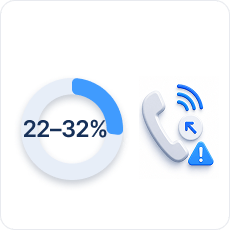
potentially unanswered inbound calls across a roughly 10,000-company benchmark and CallRail sector studies; not a universal rate.
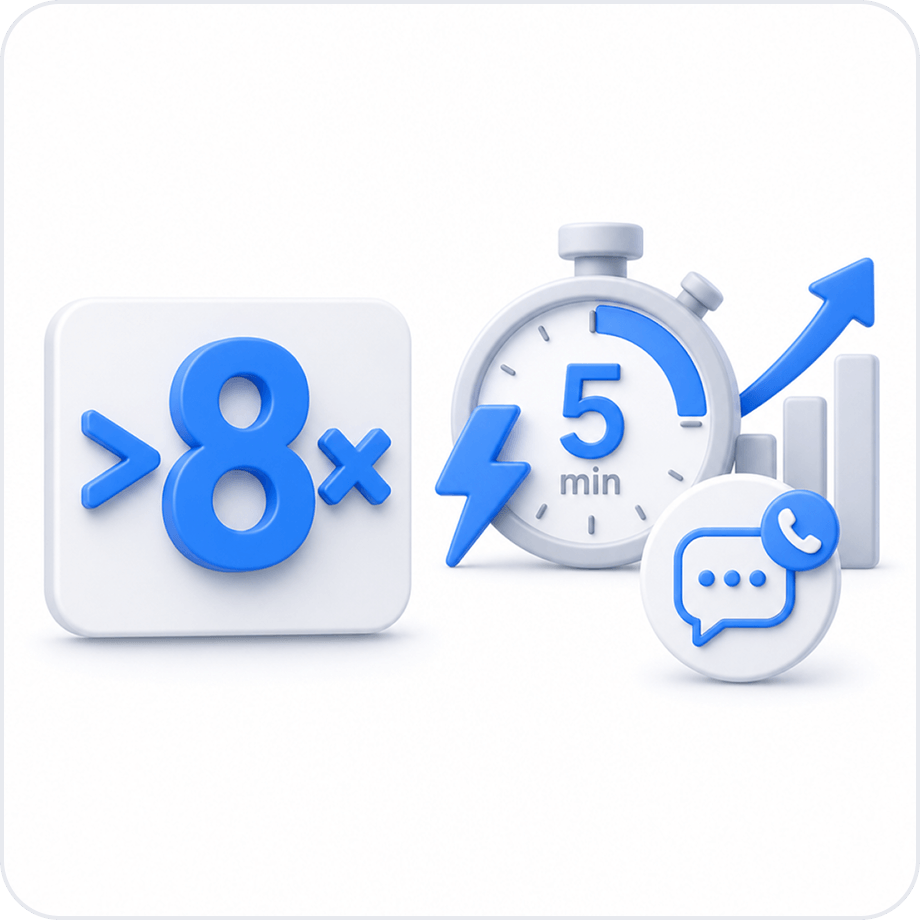
higher five-minute conversion in InsideSales’ analysis of 55M+ activities and 5.7M leads; an inbound-lead, not phone-only, benchmark.
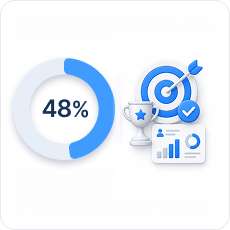
of B2B account executives reached quota across 158 companies in The Bridge Group’s 2026 benchmark.
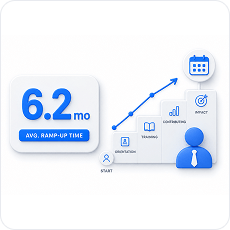
average B2B account-executive ramp-up; SHRM separately estimates $5,475 in direct nonexecutive hiring cost.
How live voice becomes controlled business action
Each sales, support or contact-center process has its own goals and dialogue states, policies and actions, knowledge and post-call data. The current CRM, helpdesk and telephony stack stay in place.
Sales teams
Manages inbound, missed-call, repeat and outbound communications. Identifies intent, qualifies needs and gathers requirements; consults, compares options and handles objections; checks availability, schedules follow-ups and reactivates leads. Updates CRM and transfers customers with the next step recorded.
Technical-support teams
Identifies customers, products and issues, then collects technical data. Checks status, follows approved diagnostics and retrieves instructions. Manages tickets and priority, routes cases, notifies customers and transfers full context without rigid IVR menus.
Service contact centers
Handles high-volume, peak and out-of-hours calls. Collects data, manages bookings and appointments, and routes customers. Sends reminders and status updates, runs surveys and outbound campaigns, qualifies responses, records outcomes and escalates exceptions.
Scenario-specific Policy Packs
Global, scenario and conditional Policy Packs govern role, goals, stages, questions and data; dialogue, objections and wording; tools, actions and CRM updates; scenario changes, handoff, completion and post-call output. Rules apply by product, customer, funnel stage, region, language or contact reason.
Human conversation model
Conversation analysis, state tracking, grounding and turn-taking manage pauses, interruptions and clarification; topic return, incomplete or contradictory answers; self-correction and tempo. Conversational signals can adjust tone, depth or handoff.
Voice in. Governed action out
The integration architecture forms a bidirectional processing path between client telephony and business systems. Telephony supplies the voice stream and call events; CRM and service platforms provide the customer record, product, status, contact history and available actions. The system returns a natural voice response and performs permitted operations. It updates client systems, produces structured results and transfers the conversation to an employee when required.
Client inputs
CRM, helpdesk, ERP, BI & customer context
Products, knowledge, Policy Packs & permitted actions
Numbers, queues, routing, call storage & session events
Controlled voice-agent pipeline
Channel & Media Gateway / API Layer
ASR, voice generation & call control
Dialogue state, Policy Core & human behavior
RAG, knowledge, tools & CRM actions
Data, backend & observability
Structured output, handoff & updates
Business outputs
Natural voice response & call control
Lead, deal, ticket, booking or status
Structured JSON, CRM actions & next step
Operator handoff, BI, dashboard analytics & monitoring
Action for frontline teams. Evidence for leadership.
The system separates the immediate outcomes required by sales, support and contact-center teams from the complete conversation record, technical metrics and policy evidence required by operations and leadership.
Sales, support & contact-center view
Immediate and outbound engagement
answer at the moment of interest or after a request; handle out-of-hours and peak-load traffic. Reactivate leads, send reminders, conduct follow-ups and scale outbound campaigns.
Sales qualification & consultation
identify source and intent, uncover needs and gather requirements. Explain products and differences, answer questions and handle objections. Check availability, select an appropriate product or tariff, create a lead, update the deal and record the next step.
Technical-support resolution
identify the customer, product and issue, then collect technical data. Retrieve instructions or status and complete approved diagnostics. Create or update a ticket, assign priority, notify the customer and route the case.
Booking & contact-center workflows
collect forms and contact data; make or amend bookings, confirm or reschedule visits. Route between branches and specialists; conduct surveys or telemarketing, provide status updates, qualify responses and register the result.
Qualified handoff & system continuity
transfer requested, qualified, nonstandard or failed interactions with customer data, dialogue history, current state and a summary. Preserve CRM, ticket, booking and next-step records.
Operations & leadership view
Complete conversation record
records messages and transcript; dialogue states, applied policy and version, RAG context; tool calls, extracted facts and CRM actions; outcome, handoff, errors, latency and other agreed events—not only audio
Commercial & service analytics
tracks answer rate, response time, completion and routing accuracy; conversion where applicable; products, scenarios and customer groups, with a unified record of conversations, actions and outcomes
Policy & knowledge performance
compares Policy Pack versions and policy deviations; missing or outdated knowledge, recurring questions and objections; permitted-action coverage and reasons for handoff
Operational metrics
tracks latency and recognition errors; tool success and transfer rates; processing cost and load; failed or incomplete conversations and technical stability
Continuous improvement evidence
the complete interaction dataset required to refine policies, knowledge, tools and conversation logic, add products and scenarios, and evolve the system from actual conversations rather than assumptions
The voice model
speaks. The
agentic system
decides.
A monolithic voice bot combines speech, context and business rules in one model and prompt, making complex behavior hard to control and test. This architecture separates real-time communication from dialogue state and goals; policies, knowledge and tools; CRM actions, logging and escalation. The voice provider, scenario, business rules or CRM integration can be tested and changed independently without rebuilding the complete process.
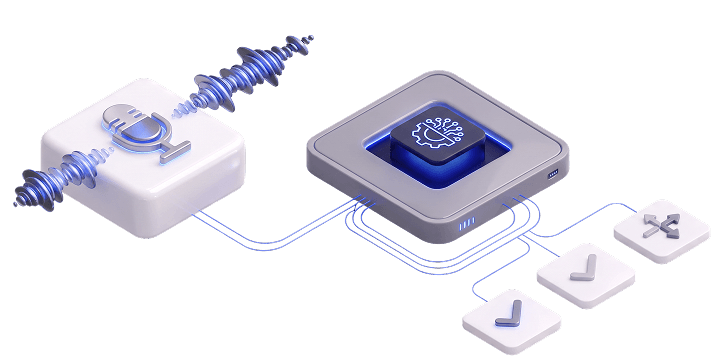
What happens when a caller interrupts or changes direction
- Handles turn-taking and interruptions, resumes naturally after pauses, and preserves the call session
- Retains confirmed facts, missing information, active goals and the current dialogue stage
- Reassesses intent and tone when answers are incomplete, contradictory or self-corrected
- Applies the active policy for the product, customer, region, language and dialogue stage
- Queries approved business systems and records the facts required after each turn
- Continues automatically when supported — or transfers the collected context and summary to a person
We deploy the agent around your telephony and operating controls
The deployment architecture is tailored to data sensitivity and regulatory requirements; language coverage and voice quality standards; expected workload and operational costs; existing telephony infrastructure and provider availability; and data retention and logging policies.
Existing-stack integration
Where the required interfaces are available, the agent integrates with your existing telephony infrastructure and communication channels. It also integrates with your core business software, scheduling tools, and internal operational systems.
Configurable voice & agent stack
The Real-Time Voice Layer is selected based on language and quality requirements, performance constraints, and operational or compliance policies. The underlying logic, knowledge sources, and system integrations remain modular, allowing each component to be configured or replaced independently.
Controlled data, access & actions
Client policy sets out what data can be processed, recorded, and retained, and who can access it and what they’re allowed to do. It also covers system logs, data visibility, and when human review or approval is required.
What you receive
- Configured Channel & Media Gateway / API Layer for the selected SIP, VoIP or available WhatsApp Business Calling interfaces
- Real-Time Voice Layer and Agentic Conversation System with dialogue-state, goal, decision and escalation logic
- Scenario-specific Policy Packs, human conversation model, approved actions, completion criteria and handoff conditions
- RAG knowledge layer and approved CRM, helpdesk, scheduling, product, billing and internal-service integrations
- Data, Backend & Observability Layer: conversation database, structured extractors and CRM adapter; backend services, event log and policy versions; analytics, monitoring and error traces
- Historical, real and synthetic test coverage, agreed pilot metrics, production monitoring, deployment documentation and an evolution plan
How we deploy a voice AI agent for your business
Implementation reflects real conversations and call economics; target scenarios, knowledge and tools; telephony and data policy; agreed pilot and production criteria.
01
Discover
Map inbound and outbound call types, volume, answer rate and response time; duration, handling cost and current conversion; team structure, missed-call reasons, the CRM's role and human handoff points. Deliver a process map, target automation scenario and agreed pilot criteria.
02
Analyze
Study recordings, transcripts, scripts and instructions; successful and unsuccessful calls, recurring questions and objections; customer behavior, strong employees’ methods, escalation causes and the actual structure of conversations.
03
Design
Define the Policy Pack: role, objective and stages; required questions, customer types and conditional transitions; objection logic, restrictions and permitted actions; CRM-data format, handoff rules and completion criteria. Configure turn-taking, interruptions and pauses; clarification, confirmation and topic return; emotional-signal responses, recovery after misunderstanding, and explanation speed and depth.
04
Connect
Build the RAG knowledge layer. Integrate required CRM, helpdesk, calendar and booking services; product catalogue, order-status and ticketing services; routing and internal services, with explicit data-access and tool-action permissions.
05
Configure
Design the media path and SIP integration; numbers, queues, transfer logic and call events; available official WhatsApp interfaces. Configure the conversation database, logged events, extracted fields and CRM outputs; reports, metrics, policy versioning and data available to each role.
06
Validate
Use real, historical and synthetic dialogues to test standard, long and nonlinear calls; interruptions, pauses, background noise and accents; incomplete or contradictory answers and nonstandard questions; tool failures, missing data, handoff and call termination; concurrent load and latency.
07
Pilot & move to production
Limit the pilot to one process, product, number, customer group or period. Measure answer rate and time to answer; completed conversations, routing accuracy and data completeness; tool success and transfer rate; latency, recognition errors, handling cost and relevant conversion. After agreed metrics are confirmed, connect production and increase traffic gradually to control quality and stability.
08
Observe & evolve
Monitor errors, cost and latency; failed conversations, missing knowledge and policy deviations; handoff causes and CRM actions; technical metrics and business outcomes. Add products, scenarios and new Policy Pack versions without rebuilding the complete infrastructure.
Questions before
deployment
Here are the questions our clients ask us most often
How is this different from an IVR or a standalone real-time voice model?
An IVR follows fixed options; a standalone real-time model primarily manages voice interaction. Our architecture separates speech from context and goals; policies, knowledge and tools; CRM actions, logging and escalation. It supports nonlinear conversations and lets the voice provider or business logic change without rebuilding the complete process.
Can it handle inbound and outbound calls through SIP and WhatsApp?
Yes. Separate scenarios, Policy Packs, permitted actions and outcome criteria can be configured for inbound and outbound calls. SIP and WhatsApp can use the same agentic logic and CRM environment, while simultaneous operation depends on the official interfaces available for the relevant WhatsApp Business account, region and provider.
Do we need to replace our CRM or telephony, and how is deployment phased?
No, provided the current systems expose the required SIP, API, webhook or other integration interfaces. A recommended starting point is a limited pilot for one process, number, product or customer type. The schedule depends on scenario count, Policy Pack complexity, CRM and telephony readiness, available historical calls, languages, tools and deployment requirements; the exact plan is defined after technical and process discovery.
Can it handle complex, multilingual and nonlinear conversations?
Yes, subject to the selected real-time voice stack and configuration. The system tracks state, handles interruptions, revisits topics, requests clarification and reacts to incomplete answers or conversational signals under policy control. Available languages and quality depend on the ASR, speech-to-speech or translation models; recognition, terminology, voice, pronunciation and scenario logic are validated separately for each language. Behavioral signals guide the conversation but are not psychological or medical diagnoses.
When is a call transferred to a person?
Handoff can occur at the customer's request, under a Policy Pack rule, after qualification, for a nonstandard situation or following a technical error. The employee receives the collected data, conversation history, current state and concise summary rather than an unexplained transfer.
What is recorded, and how are data and agent actions controlled?
The agreed record may include messages and transcripts; dialogue states, applied policy versions and RAG context; tool calls, extracted facts and CRM actions; outcomes, handoffs, errors, latency and other approved events. Client policy defines live-only processing, recording and retention; retention periods and access; readable data, callable tools and permitted operations. Sensitive actions can require confirmation or a human-in-the-loop step. Operation without call recording depends on the scenario, architecture, internal policy and applicable law.
Product consultation
Need every inbound
call answered at the
moment of interest?
call answered at the
moment of interest?
We will analyze your real conversations, design the Policy Pack, connect CRM and telephony, configure the Real-Time Voice Layer and deploy a voice AI agent around a defined sales, support or contact-center process.