
Telephony & call storage
Analyze every call.
Not a random sample
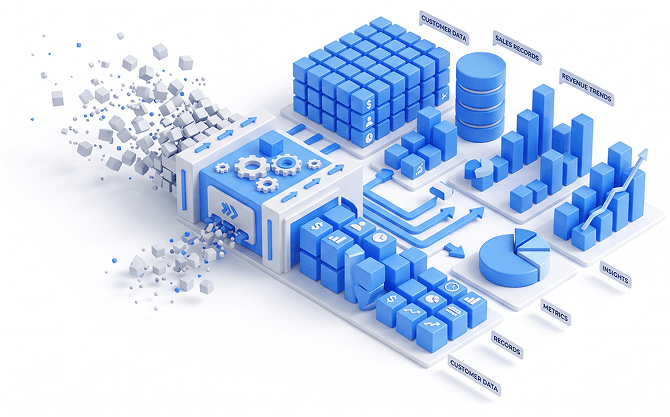
Our call analysis system is an on-premise, API-first AI pipeline that transcribes, translates,understands and structures customer conversations. It receives audio and call metadata,processes them inside a dedicated environment, and returns ready-to-use data to your CRM,BI, QA or internal dashboards.
Our product is not a generic SaaS scorecard. It is a private analytics layer configured around yoursales funnel, products, quality criteria and infrastructure.

Why is manual call review a problem?
- Most conversations never reach a human reviewer
- Sensitive audio needs a controlled AI environment
- Critical sales patterns remain statistically invisible
- Complex B2B calls require funnel-specific logic
1–3%
typical manual QA coverage
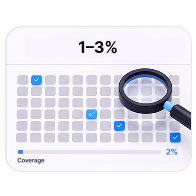
- manual sample
- available pool
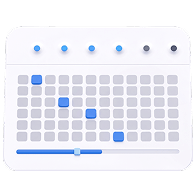
4–6
calls reviewed per agent / month
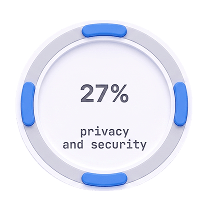
27%
organizations that banned GenAI over privacy risks
13
people in the average B2B buying decision

How the system turns every call into structured business data
The same pipeline serves sales teams, QA, management, compliance and business analytics — without forcing the company to replace its current CRM or telephony stack.
Multilingual transcript & speakers
The system detects the language, separates the agent and customer, creates a time-coded transcript and translates it when the team needs one reporting language.
Funnel, needs & objections
The call is mapped to your sales stages while client needs, objections, buying signals and risks show where the deal moved forward or stalled.
Semantic call search
Teams can find calls by meaning — for example, doubts about ROI even when the customer never says “expensive”.
Custom scorecards
Each call is checked against your playbook, qualification rules and quality criteria instead of a universal checklist.
Structured CRM data
Your CRM, BI or dashboard can use summaries and facts, risks, next steps and confidence scores.
Action for every role
Sales receives the next action, leaders see patterns, and analysts compare agents, products and client groups.
API in. Structured intelligence out
The analyzer sits between your call systems and business tools. Audio and metadata enter through controlled interfaces; structured results return through APIs, webhooks and existing workflows.
Client inputs
Custom call metadata
CRM & deal context
Consent & access
Private AI pipeline
Language & speakers
Transcript & translation
Sales-stage analysis
Needs & objections
RAG semantic search
Structured output
Business outputs
Transcript & summary
Quality analytics
Sales intelligence
CRM & BI updates
Action for sales. Evidence for leadership
The system separates a concise operational view for the sales representative from full analytical detail for leadership and analytics.
Sales agent’s view
Agent mistakes
missed qualification questions, weak arguments, skipped stages and CRM inconsistencies
Recommendations
next best action, follow-up angle and communication advice
Client objections
explicit and implicit objections grouped by commercial meaning
Deal status
needs, buying signals, risk flags, next step and probability of continuation
Post-call actions
what the sales rep should do immediately after the conversation
Leadership & analytics view
Detailed analysis
of what was said, avoided, implied or left unresolved
Segment reports
across agents and teams
Summary reports
by client group, source, market and funnel stage
Comparison
between the actual CRM record and the rules for completing it
Recurring objections
lost-deal causes, qualification gaps and conversion signals
Find the
meaning. Not
just the word
Keyword search finds calls where someone said “expensive”. RAG with reranking finds calls where the buyer questioned economic value — even when that exact word was never used.
Keyword search
“expensive”
02:14
07:38
RAG + RERANK
doubts about
economic value
01:42
06:41
What the sales rep missed when handling “It’s too expensive”
- Did not clarify what exactly felt expensive
- Did not compare the price with expected business value or ROI
- Moved to a discount before establishing value
- Did not ask about budget, timing or decision criteria
- Did not check whether price was the only blocker
- Finished without a concrete next step or follow-up commitment
We deploy Call Intelligence in the safest way for your infrastructure
Call Intelligence is delivered as a dedicated system tailored to your data, call flow and internal systems. The deployment model is chosen based on sensitivity, load, latency and available infrastructure.
Dedicated on-premises
Runs inside your own infrastructure with local processing and controlled access.
Private hosted
Runs in an isolated private environment with dedicated access and data retention rules.
Controlled model routing
Different data types can be routed to approved models under explicit policies.
What you receive
- Report: missed qualification questions, weak arguments, skipped stages and CRM inconsistencies
- Configured AI pipeline: language and speakers; transcription and translation; VectorDB, RAG and structured output
- Custom analysis rules for your funnel, objections, quality criteria, risks and next steps
- CRM and BI integration with a defined input and output schema
- Security controls, local-processing options and logging
- Deployment documentation, monitoring and an evolution plan
How we deploy Call Intelligence for your business
The deployment is configured around your call storage, CRM metadata, sales stages, quality rules and reporting requirements.
01
Discover
Audit call storage, metadata, sales funnel, products, reporting, and current QA criteria.
02
Design
Specify audio formats, input metadata, output JSON schema, webhooks, access controls, and integration points.
03
Configure
Enable language detection, diarization, transcription, and translation; set up chunking, VectorDB, segmentation, and RAG.
04
Instruct
Build and version scorecards, funnel logic, objection classes, risk flags, and next-step rules.
05
Validate
Replay historical calls, benchmark against manual QA, and refine extraction and analytical conclusions.
06
Integrate
Deliver results to CRM, BI, dashboards, or QA panels through governed APIs.
07
Roll out
Go live on production traffic; monitor latency, error rates, data completeness, and analysis quality.
08
Evolve
Extend instructions for new products, markets, teams, scripts, and business hypotheses.

Questions before
deployment
Here are the questions our clients ask us most often
Can we deploy on-premises?
Yes. A dedicated setup runs locally in your infrastructure, with controlled access.
Can calls stay out of public AI models?
Yes, the pipeline can process audio, transcripts and analytical data locally, while model-routing policies restrict each data type to approved infrastructure.
Can the system analyze multiple languages?
Yes, the pipeline can detect the conversation language, separate speakers, generate time-coded transcripts and translate them into a common reporting language.
Is it only for sales?
No. The same structured call data can support sales management and coaching; quality assurance and compliance; business intelligence and operational analytics.
Can the analysis criteria change?
Yes, version-controlled scorecards, funnel logic, objection classes, risk indicators and next-step rules can be updated as products, markets and business requirements evolve.
Can calls be searched like a knowledge base?
Yes, VectorDB indexing, RAG and reranking enable permission-controlled semantic search across transcripts by meaning, context and commercial intent rather than exact keywords.
Product consultation
Want to know what is
really happening in
your sales calls?
really happening in
your sales calls?
We will connect Call Intelligence to your call pool, CRM and analytics so every conversation becomes structured data for sales, leadership, QA and BI.