

Briefs & task metadata
Automate Content Production with Editorial Control
Our AI Content Pipeline coordinates AI agents to create, review, update and distribute text across websites, blogs, social media, newsletters and product pages. It parses existing briefs and determines which executable editorial policies apply and take precedence. It retrieves approved claims and verified sources, generates and revises content, then routes each output to review or publication.
It is not a generic AI writing interface. It is a governed production layer configured around your content ontology, evidence standards, approval process, publishing stack and content lifecycle.

Why does manual content production become difficult to scale?
- Production capacity remains tied to the number of people available to research, write, review and publish
- Current research becomes a bottleneck across multiple topics, markets and languages
- Editorial policies drift between clients, products, writers, platforms and content formats
- Approved claims, rejected approaches and editor decisions remain fragmented across files and teams
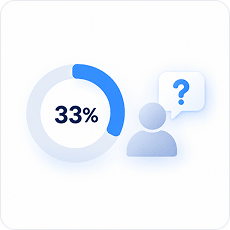
B2B marketers without a scalable content-creation model

B2B marketers challenged by creating content consistently

B2B marketers citing lack of resources as a challenge

B2B marketers challenged by access to subject-matter experts
How the pipeline turns a brief into governed, publishable content
The same production layer supports multiple clients, brands, products, languages and channels without forcing the company to replace its current briefing, editorial or publishing systems. It is designed for digital marketing agencies, companies with multiple web and social assets, controlled or high-quality content environments, and high-volume publishers where content operates as a repeatable business process.
Structured brief intake
Forms, spreadsheets, project-management tasks, CMS records, batch files or API requests are normalized into a production specification containing the audience, objective, structure, claims, sources, SEO inputs, restrictions, review route and destination.
Content ontology
The ontology maps relationships between clients, brands, products, audiences, markets, content types, platforms, policies, claims and update rules so each task activates the correct production context.
Executable editorial governance
The Policy Core applies always-on and conditional rules in a defined order—from company-wide safety requirements to client, product, content-type, platform and task-specific instructions.
Evidence-grounded knowledge
The RAG Claims System retrieves reusable claims, approved and rejected examples, editor feedback and supporting evidence. The Source Core governs permitted sources, evidence levels, freshness and citation rules; optional research agents can discover new material and route candidate sources and claims for operator approval before production use.
Agentic production and revision
Specialized stages interpret the brief, identify missing information, plan claims and evidence, generate sections, adapt the draft to the channel, detect conflicts and revise weak content before completion.
Controlled delivery and lifecycle
Brief-completeness, policy, claim, source, originality, duplicate-content, AI-text-risk and platform checks determine whether content enters human review, becomes a CMS draft, is published automatically or is scheduled for monitoring and future updates.
Brief in. Governed content out
The pipeline connects systems where content tasks originate with tools for reviewing materials, publishing approved content and maintaining it. A separate operational database can record task and policy versions, ontology branches, retrieved claims and sources. It can also log model and agent actions, drafts and validation results; errors and retries; editorial decisions, publication events and update history.
Client inputs
Products, audiences & channels
Policies, claims & sources
Review & publishing rules
Controlled AI content pipeline
Brief parsing & normalization
Ontology & policy resolution
Claim & source retrieval
Agentic planning & generation
Quality checks & revision
Output API, publishing & updates
Business outputs
Review-ready content
Evidence & policy record
Platform-specific versions
CMS & workflow updates
Content for every channel. Evidence for every decision
The pipeline separates the working view required by writers and editors from the operational and analytical views used by content operations, marketing leadership and product teams.
Writer & editor view
Review-ready draft
content structured for the required audience, format, channel and objective
Evidence package
source references, claims used, confidence status and applicable restrictions
Policy results
applied rules, failed checks, unresolved conflicts and prohibited formulations
Revision support
suggested changes, originality results, editor comments and version history
Approval route
required reviewer, current status, publication destination and refresh deadline
Leadership & analytics view
Production analytics
volume, production time, approval rate, revision frequency and publishing status
Quality analytics
policy violations, rejection reasons, recurring corrections and failed checks
Product & knowledge insights
shows recurring customer questions and missing evidence. Flags unclear positioning, documentation and content gaps, outdated product information, and topics needing clarification or research.
Operational control
bottlenecks by client, project, content type, reviewer and production stage
Lifecycle visibility
outdated-content volume, update deadlines, platform distribution and refresh status
Manage the
claim. Not just
the text
Conventional knowledge-base search retrieves document passages. The RAG Claims System retrieves controlled knowledge units with their evidence and status, permitted context, editorial history and review date

What the pipeline checks before using a product claim
Source support
Traceability to an approved source with sufficient evidence for the proposed wording
Claim status
Classification includes verified, deprecated, context-dependent, disputed and insufficiently supported claim states
Permitted context
Authorized use by product, market, audience, language and content type
Evidence-aligned wording
Formulation calibrated to the recorded confidence, limitations and source strength
Freshness and review
Source currency, claim review date and applicable refresh conditions
Production learning
Approved, rejected, high- and low-performing content, editor corrections and past decisions inform production. They show which claims, structures and formulations to retain, qualify or avoid
We deploy the pipeline around your infrastructure and publishing controls
Content volume and publishing frequency shape setup, alongside quality requirements and model capabilities. We also account for platform restrictions, latency, available infrastructure and operating cost.
Controlled processing architecture
Each production stage uses an approved processing environment. Selection follows capability, quality and integration requirements, provider permissions and operating-cost requirements.
Cost-efficient orchestration
Where technically suitable and permitted by the selected providers and client setup, high-volume stages can use subscription-based coding-agent environments. They need not rely exclusively on metered generation APIs.
Existing-stack integration
REST APIs, webhooks, CMS connectors and custom adapters link project-management systems, content forms and editors. They also connect approval queues, knowledge bases, internal databases, analytics tools and publishing platforms.
What you receive
- Structured brief parser and content ontology for your projects, products, audiences and channels
- RAG Claims System and Source Core with evidence, confidence, context and freshness controls
- Human-review and automated-publishing routes with defined input, output and approval schemas
- Version-controlled Policy Core with always-on rules, conditional policies and precedence logic
- Operational logs cover policy versions, model and agent actions, and checks; errors and retries; approvals, publication events and updates
- Agentic workflow for planning, generation, revision, validation and platform adaptation
How we build an AI Content Pipeline for your business
The implementation is configured around your briefs, historical content, editorial rules, sources, review process, content estate and publishing infrastructure.
01
Discover
Map participants, brief formats, products, content types and platforms. Map research methods, review stages and publication workflows.
02
Analyze
Study approved and rejected content, editor feedback and source use. Review recurring errors, successful patterns and existing quality criteria.
03
Normalize
Convert current brief formats into structured production specifications while preserving the team’s established task-creation process.
04
Model
Build the ontology connecting clients, brands and products; audiences and markets; formats, platforms and destinations; goals and policies.
05
Govern
Set policy precedence, claim statuses, approved sources and evidence requirements. Define access rules, freshness controls and review conditions.
06
Orchestrate
Build agentic stages for planning, generation and revision; quality checks and third-party validation; structured output.
07
Integrate and validate
Launch on live traffic and monitor latency, errors, data completeness and analysis quality.
08
Roll out and evolve
Launch a controlled pilot. Track response quality and policy adherence, completion rate, tool usage and CRM updates, plus latency and errors. Then expand and evolve the system.

Questions before
deployment
Here are the questions our clients ask us most often
How does the pipeline fit our existing infrastructure?
The production layer links current briefing, editorial, approval and publishing systems via REST APIs, webhooks, CMS connectors and custom adapters. Its processing stack is chosen for required capabilities and quality, provider permissions, latency and volume, available infrastructure and operating cost.
Do we need to change our current brief format?
No, forms, spreadsheets, task systems, CMS records and API requests can be parsed into structured production specifications without replacing the team’s existing briefing process.
Can different brands and content types use different rules?
Yes. The Policy Core activates version-controlled rules by client, brand and product; content type and platform; market, language and audience; risk level and publication destination.
How does the pipeline prevent unsupported statements?
Important statements are matched to approved claims and verified sources, checked against confidence and context restrictions, and flagged when the available evidence does not support the proposed wording.
Can editors remain in the approval process?
Yes, content can be routed to an editor with its sources, applied policies, claim statuses, detected issues and revision history before any publication event is authorized.
Can the pipeline update existing content after publication?
Yes. It can monitor facts, claims and sources, plus links, policies and review deadlines. It can identify affected materials, prepare controlled revisions and republish approved updates through connected platforms.
Product consultation
Want to increase content
output without losing
editorial control?
output without losing
editorial control?
We will analyze your briefs, policies, historical content, evidence standards and publishing stack, then build a governed AI Content Pipeline around the way your team already works.