WhatsApp, Telegram & Meta
One AI negotiator.
Every channel,
message and
attachment
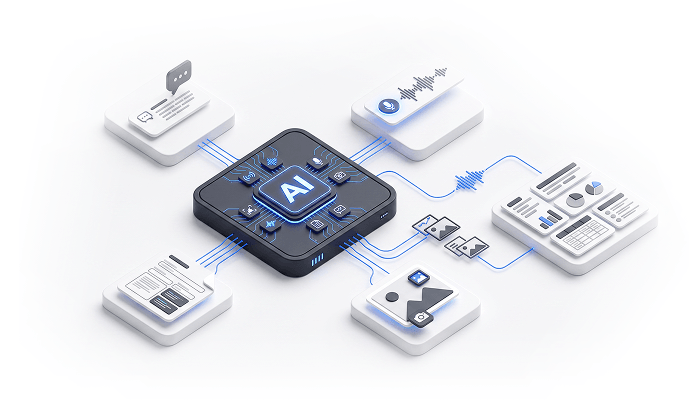
We build multimodal AI systems for customer communication across WhatsApp, Telegram, Meta, email and internal interfaces. They manage dialogues and process audio, images and documents. They extract data, generate permitted files, update business systems and hand off exceptions.
Each AI negotiator uses a role-specific Persona & Policy Pack. It defines style, responsibilities and objectives; knowledge and actions; restrictions and handoff rules.
The solution connects channels, AI employees, operators and business data — either through the client’s CRM, ERP or helpdesk, or as a turnkey environment.

Why does fragmented customer communication limit automation?
- Customer history is distributed across messengers, email, CRM, helpdesk, files and individual employees
- Voice messages, photographs, documents and repeated data entry create manual work around every conversation
- Human handoff often occurs without the full thread, attachments, extracted facts or actions already taken
- Without reliable integration, AI agents can add another isolated tool instead of resolving operational fragmentation
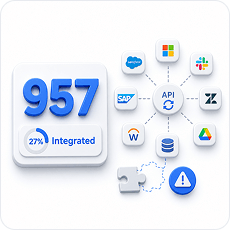
applications used by the average enterprise organization; only 27% are integrated
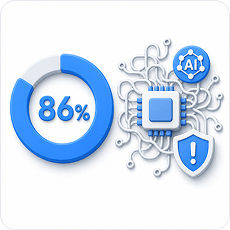
of IT leaders are concerned that poorly integrated AI agents may add more complexity than value
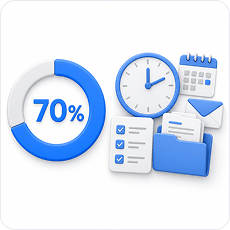
of the sales workweek is spent outside direct selling
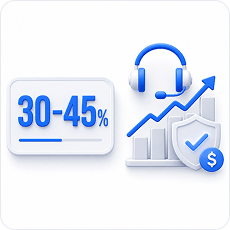
potential customer-care productivity impact, expressed as an equivalent share of current function costs
How the system turns every message and attachment into an operational workflow
The same agentic core can support multiple channels, employee roles and business processes while preserving the client’s existing CRM and internal systems — or provide the missing operational environment as a turnkey deployment.
It serves organizations needing an operator workspace for human handoff and SLA management, or an integration layer across fragmented systems. It also supports client-defined data, model-routing, access and retention controls, or a complete communication environment configured around their processes and roles.
Turnkey system or integration layer
Deploy a complete environment: a web interface and CRM layer; customer and conversation records; a handoff queue and agent network; a knowledge base, database, analytics and channel connectors. Or add only the required AI and integration components to an existing stack.
Role-specific Persona & Policy Packs
Each AI negotiator follows a real professional role: tone, duties and goals; knowledge, required dialogue stages and data to collect; permitted tools and prohibited claims; channel rules, output schema and escalation conditions. Using a real person’s name, identity or manner requires consent and adherence to AI-disclosure rules, channel policies and applicable law.
Multimodal processing in context
Text enters language and intent analysis; audio is transcribed and interpreted. Images use vision or OCR; documents use parsing, OCR or document intelligence. Tables and file sets follow controlled extraction workflows. Results enter the same dialogue state, letting the agent reply in text or with a prepared audio file and generate permitted documents or reports.
Knowledge, tools and business actions
The agent can retrieve approved product documentation, instructions and operating procedures; FAQs, pricing and service rules; templates, CRM history and permitted external sources. When policy allows, it can check orders, create leads or tickets, update deals, request or verify files, book meetings, generate documents, assign tasks or notify customers.
Context-preserving human handoff
When policy, risk or an exceptional case requires a person, the operator receives the customer record, full history, attachments and transcripts. The handoff includes extracted data, a summary, transfer reason, current workflow state and recommended next action. Control can stay with the person or return to the AI under policy.
Channels in. Governed communication and business actions out
The system creates a bidirectional layer between customer channels and enterprise systems. Channel connectors authenticate connections and manage messages, media and threads; delivery events, rate limits and retries. The gateway normalizes message and attachment schemas, resolves identities, routes events and enforces access. Queues and idempotency controls protect downstream processing.
The Conversation Database links content and workflow state to policies, RAG context and model routes; tool calls and handoffs; outcomes and metrics. APIs, webhooks, adapters and event-bus integrations exchange data and actions with approved business systems.
Communication inputs
Email & internal channels
Text, audio & images
Documents, tables, files & delivery events
Multimodal agentic system
Channel normalization & identity resolution
Persona, policy & workflow state
Multimodal processing & extraction
RAG, knowledge & model routing
Tools, business actions & handoff
Conversation database, operator interface & backend services
Business outputs
Identity, intent, product interest, needs, objections & behavioural signals
Text or prepared-audio replies, generated files & notifications
Extracted fields, CRM records, statuses, tasks, next steps & contextual handoffs
Full interaction log, confidence, cost, errors, retries & BI events
Control for operators. Evidence for leadership
The system gives employees a focused interface for exceptions and human decisions, while operations and leadership receive the data required to evaluate communication quality, automation, integrations and business outcomes.
Operator view
Prioritized handoff queue
transfer reason and priority; channel and SLA; responsible employee and current workflow stage
Unified customer context
customer record, full message history, attachments, audio transcripts and image or document analysis
AI decision record
extracted facts, missing data, actions already performed, proposed response and recommended next step
Human control
accept or redirect cases, edit replies, correct extracted data, approve sensitive actions or request more information. Corrections can inform Policy Pack, extraction-rule and evaluation-set development.
Controlled resumption
retain manual ownership, complete the process or return the conversation to the AI negotiator under the applicable policy
Leadership & operations view
Communication analytics
volumes, topics, objections, outcomes and customer-group or product results across channels and AI roles
Service performance
time to first response, time to resolution, automation, handoff and completion rates
Quality governance
policy-pack performance, extraction quality, operator corrections, missing knowledge and unresolved processes
Integration health
connector errors, retries, CRM synchronization completeness, latency and processing failures
Operational economics
infrastructure load, model usage, processing cost and comparative effectiveness of local and proprietary models
One request.
Multiple formats.
One operational
outcome
A customer can start with a text message, add a voice explanation, send a photograph and attach a document. The system treats these inputs as one governed process rather than four unrelated messages.
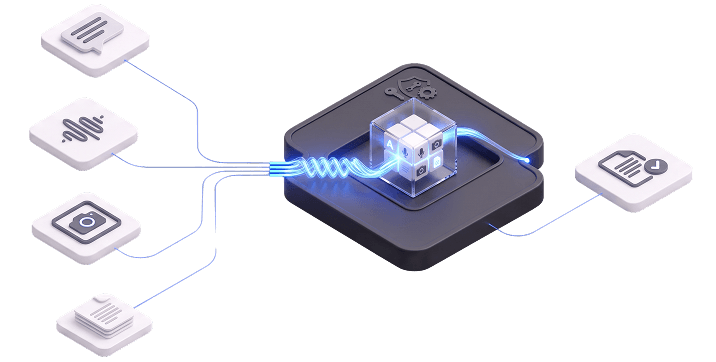
What the system does across the conversation
- Links the thread and customer identity under configured resolution rules
- Transcribes audio, analyzes images, classifies documents and extracts required fields
- Tracks confirmed facts, missing data, completed actions, next questions and handoff status
- Applies the active Persona & Policy Pack; runs checks and permitted actions
- Queries approved systems, generates files, updates records and stores results
- Transfers full context to an operator and resumes automation when permitted
We deploy the intelligence around your infrastructure and data policy
Core components can run on client-controlled infrastructure or in a dedicated private environment, using local, proprietary or hybrid model routing. Messaging transport remains dependent on official channel networks and APIs. Costs cover infrastructure, channel traffic, selected external services and support — not mandatory per-role, per-user or per-Policy-Pack subscriptions.
Local model infrastructure
Local models support client-controlled processing and model-version control without external LLM token charges. Compute, storage, operations and official channel costs still apply, and the selected models must meet the required language, modality and reasoning quality.
Proprietary model infrastructure
Approved external models can be used when their reasoning or multimodal capabilities better fit the task and the applicable data policy allows the route. Provider tokens and related services are charged according to actual use.
Hybrid model routing
Sensitive data can stay on local models while permitted tasks use proprietary services. Routing may depend on channel, data type, customer and attachment; AI role and risk level; required quality, latency and cost.
What you receive
- Turnkey communication environment or a defined AI and integration layer for the existing CRM, ERP or helpdesk
- Role-specific AI negotiators with Persona & Policy Packs, knowledge, tools, permissions and handoff criteria
- Channel connectors, gateway, multimodal processing and structured extraction for approved message and file types
- Operator web interface, contextual handoff workflow, Conversation Database and operational analytics
- Bidirectional APIs, webhooks and adapters with agreed schemas, access control, idempotency and error handling
- Model-routing configuration; agreed retention, encryption, backup, monitoring and audit controls; deployment documentation and an evolution plan
How we deploy Messengers Multimodal AI Systems for your business
Implementation reflects communication processes, employee roles and channels; attachments and business systems; data policies and infrastructure; measurable pilot outcomes.
01
Discover
Map channels, customer types and employee roles; message volumes, peak hours and attachment types; CRM processes, manual actions and data-loss points; handoff reasons, quality rules and required outcomes. Audit business accounts, APIs and webhooks; identity data, storage and access rights; integrations and security requirements.
02
Analyze
Ground functional digital profiles in actual work. Review successful and unsuccessful conversations, job descriptions, response standards and policies; typical questions, files and voice messages; escalations, employee actions, errors, decisions and outcomes.
03
Design roles and policies
Define each AI negotiator’s profession, style, goals and duties; knowledge, mandatory data, permitted actions and restrictions; channel behavior, handoff criteria and result schema. Set company, role, process and product policy layers; channel, file and security layers; conditional, temporary, risk-based and human-in-the-loop layers.
04
Engineer multimodal workflows
Specify accepted audio, image, document and file types, with transcription, OCR, vision, document-intelligence and extraction routes. Set generated-file permissions, original-file storage, CRM outputs and manual-review conditions. Define knowledge sources and approved business tools.
05
Connect channels and operators
Build the agreed WhatsApp, Meta, Telegram, email, website or internal connectors. Configure authentication, webhooks and media handling; delivery events, retries and channel limits. Set up the operator interface, handoff queue, priorities, assignments and SLAs, with manual-response and return-to-AI controls.
06
Integrate and instrument
Define input context, output schemas, CRM fields, status models and actions; webhooks, idempotency, error handling, access control and audit requirements. Configure Conversation Database retention, permissions, encryption, backup and monitoring; file and dialogue structures, policy versions, business outcomes, technical metrics and dashboards. Select local, proprietary or hybrid deployment and routing.
07
Validate & pilot
Test historical and synthetic scenarios: long threads and topic changes; multiple channels and modalities; missing data and damaged files; API failures and duplicate events; handoff, AI resumption and CRM updates; role and policy compliance, load and latency. Pilot one role, channel, product, department, customer group or inquiry type under controlled conditions and confirm agreed metrics.
08
Roll out & evolve
Increase production load in stages and add roles, channels and processes. Monitor cost, latency and errors; handoff reasons, unprocessed attachments and missing knowledge; policy deviations, CRM synchronization and operator corrections; AI-role outcomes, channel performance and infrastructure load.

Questions before
deployment
Here are the questions our clients ask us most often
Is this a chatbot for one messenger?
No. It is a multimodal agentic environment linking communication channels and AI employees with an operator interface and Conversation Database, business systems and knowledge, and backend tools.
Do we need to replace our CRM or launch every channel at once?
No. The required components can connect to an existing CRM, ERP or helpdesk through APIs and webhooks, and deployment can begin with one role, channel and measurable process. Additional connectors can be added independently when their official interfaces support the required workflow.
Can one conversation continue in another channel?
Yes, when the same customer can be identified reliably and the data policy permits histories to be linked. Identity-resolution rules are defined during solution design, while each channel can retain its own communication and action policies.
Can the system process attachments and create responses?
Yes. Depending on the workflow, it can transcribe audio, analyze images and parse documents; extract structured data and check completeness; prepare text or audio responses, generate permitted documents or reports, and send them through a supported channel.
How is human control maintained?
The Policy Pack limits data, tools and actions, can require approval for sensitive operations and defines mandatory handoff. The operator receives the dialogue, attachments and extracted data; completed actions, a summary and recommended next step. Control can return to the AI when policy permits.
Can the intelligence and models remain under our control?
Core intelligence, data, business logic, interfaces and integrations can run on client-controlled infrastructure. The system can use local models where they meet the required quality, or route permitted tasks to proprietary models under a hybrid policy; channel delivery still depends on the official infrastructure and interfaces of WhatsApp, Telegram, Meta and external email providers.
Product consultation
Want to unite
customer
communications in
one governed AI
environment?
customer
communications in
one governed AI
environment?
We will map your channels, CRM, email and messenger accounts; attachment types, employee roles and human-handoff scenarios. Then we define a complete turnkey architecture or the specific AI and integration components needed by your existing environment.