
Product, brand & experiment goal
Test Community Behavior Before Launch
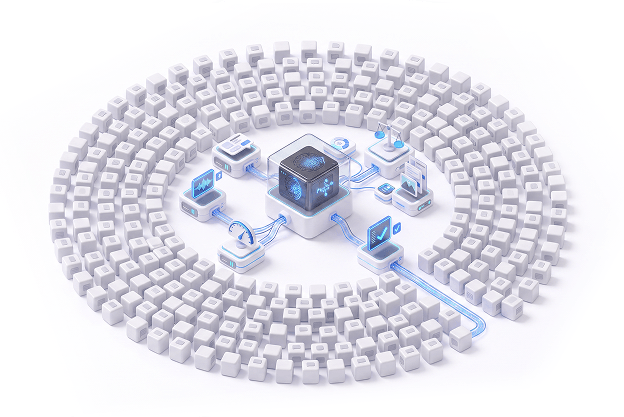
Our multi-agent AI systems simulate audience behaviour in group chats, forums, messaging environments, communities and other digital spaces. Each participant is a distinct digital persona: identity, communication style and interests; memory and goals; relationships and a behavioural contract.
Individual behaviour operates within a wider social system: roles, relationships and norms; influence and coalitions; collective memory, information diffusion and event triggers. Rather than independent AI answers, the result is an evolving community whose positions, conflicts and group reactions develop over time.
This is a controlled environment for testing product launches, community rules, brand communication and alternative social scenarios before moving selected hypotheses into a real-world pilot.

Why test social dynamics before launching?
- Independent responses do not show how people influence one another
- Static personas cannot reproduce memory, relationships or changing norms
- Live pilots expose real users before rules and interventions are tested
- A single scenario cannot reveal the range of possible group outcomes
of synthetic discussions were mistaken for real ones in its evaluation

of synthetic discussions were mistaken for real ones in its evaluation
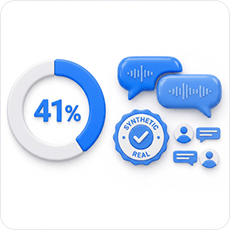
agents and 5 million interactions demonstrated in AgentSociety

of UK adult internet users used at least one social platform in 2026

How the system models a community rather than isolated responses
The simulation combines individual decision logic with shared history, social structure and controlled events, allowing teams to study how reactions emerge and propagate across a group.
Message Extraction
In the base configuration, 150+ semantic, entity/event, speech-act and behavioural parameters guide the next response. They include claims, uncertainty, engagement, influence and product interests.
Audience Constructor
Segments, seed personas, roles and experience; loyalty and decision models; influence and relationships shape a heterogeneous population. The Identity Core distinguishes participants and discussed entities.
Individual and collective memory
Short-, medium- and deep-memory layers preserve dialogue, thread history and stable experience; collective memory retains shared events, norms, narratives and reputations.
Behavioral Contracts
Each persona’s next decision and response follow its identity, memory and role; goals and emotional state; relationships, triggers and permitted actions.
Group Behavior Core & Social Graph
Models diffusion, influence and conformity; polarisation, coalitions and conflict; norm changes and newcomer behaviour. Tracks trust and relationships.
Scenario in. Collective dynamics out
The system turns client data and experiment design into a synthetic social environment. It records messages and extracted signals; internal states and active goals; contract and group-rule versions; triggers and relationship changes. Histories and analytics return through APIs, dashboards, research tools and structured exports.
Client inputs
Audience data & historical dialogues
Segments, roles, rules & relationships
Events, triggers, channels & business metrics
MULTI-AGENT SIMULATION SYSTEM
Audience definition & construction
Persona cores & layered memory
Behavioral Contracts, goals & actions
Group Behavior Core & Social Graph
Triggered simulation environment
Scenario multiverse & analytics
Business outputs
Full group communication history
Opinion shifts, clusters & diffusion
Social graph, influence & conflicts
Scenario comparisons, BI data & reports
Evidence for strategy. Dynamics for product decisions
The same environment supports product, marketing, communications, community, platform and research teams, with operational views for scenario design and analytical views for decision-making.
Product & community view
Launch response
how segments interpret, question and compare an offer before moving toward support or rejection
Community design
roles, onboarding and norms; participation and moderation; newcomer response and formation of a stable core
Communication testing
alternative brand messages, tone of voice, arguments, explanations and publication sequences
Reputation scenarios
criticism diffusion, loyal-member response, position shifts and the effect of brand or moderator intervention
Forum and support mechanics
recurring questions, unresolved topics, peer support, knowledge formation and participation load
Research & leadership view
Scenario comparison
outcomes across audience structures and rules; triggers and messages; product changes and moderation
Collective dynamics
shows opinion trajectories and recurring topics; coalitions, conflicts and norms; reasons for engagement or exit
Influence analysis
trusted participants, central actors, links between segments and information-diffusion paths
Intervention evidence
reactions to launches, price changes, external events, technical failures and conditional interventions
Decision-ready outputs
histories, structured metrics, visualisations, reports and data for BI or research systems
Model the
reaction. Not just
the response
A survey records individual answers to predefined questions. Synthetic Audience Simulation models what happens after participants see one another’s reactions, draw on shared history and respond to influence, rules and events.
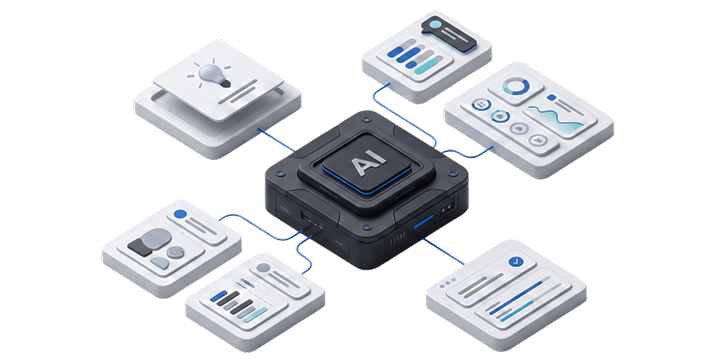
What can happen after a product price change
- Loyal customers defend accumulated value and reinforce prior trust
- Price-sensitive users compare alternatives and spread objections
- Experts request evidence and reframe the discussion around value
- Newcomers wait for majority signals before taking a position
- Influential participants connect separate groups or intensify conflict
- A brand or moderator response changes norms and the discussion trajectory
We deploy the simulation around your data and research environment
Configuration reflects persona depth and scenario duration, interaction volume and selected models, analytical requirements and available computing infrastructure.
Client-controlled deployment
Relevant components can run within client-controlled infrastructure, providing greater control over data handling, access, configurations, integrations and system operation.
Configurable simulation scale
The environment can model a small working group or a larger synthetic population; practical scale depends on persona depth, run duration, model selection, interactions and compute capacity.
API-connected environment
APIs and connectors link the simulation to web platforms and messaging prototypes; dashboards, DWH and research interfaces; knowledge stores and internal analytics.
What you receive
- Ready simulation environment and configured synthetic population
- Persona cores with identity, layered memory, Behavioral Contracts, goals and actions
- Group behaviour models, social graph and collective memory
- Trigger Engine and reusable scenario configurations
- Complete histories, analytics, dashboard or structured exports
- API integrations, documentation and rules for creating new experiments
How we build Synthetic Audience Simulation for your task
Implementation begins with the decision the experiment must support and ends with a reusable model that can evolve as real audience data becomes available.
01
Define
Set the hypothesis and decision, audience and environment, metrics and scenarios to compare.
02
Analyze
Study segments and historical conversations, content and reactions; conflicts, roles, leaders and norms; causes of engagement or attrition.
03
Construct
Create seed personas and segments; identities, interests and experience; positions, influence levels and relationships.
04
Configure
Define extraction and memory; Behavioral Contracts, goals and actions; decision logic and communication patterns.
05
Model
Formalise norms, influence and social proof; coalitions and conflict; newcomer behaviour, collective memory and diffusion.
06
Build
Create the chosen communication environment and configure timed, conditional and manual triggers.
07
Run and compare
Vary audiences, rules, events, messages and initial positions across repeated runs; compare recurring outcomes.
08
Deliver and evolve
Provide the environment and population, models and scenarios, analytics, integrations and documentation. Refine them with real-world data.

Questions before
deployment
Here are the questions our clients ask us most often
How is this different from a survey or multiple independent AI answers?
Participants share an environment, Social Graph, rules and history, so each reaction depends on prior group activity — not only the original prompt.
Can we define the audience and use real community data?
Yes. Segments, roles and behaviour models can be designed from supplied historical messages, research, rules, topics and reaction data.
How many synthetic participants can a simulation include?
Small groups or large populations are possible; scale depends on persona depth, duration, interaction volume, selected models and compute capacity.
Can we test several launches, rules and moderation approaches?
Yes. Scenario Multiverse repeats experiments with different audience compositions and rules; event sequences and messages; triggers and moderator actions.
Can positions and influence change during the simulation?
Yes. Information, source trust and group pressure, experience, memory and Behavioral Contracts can shift positions. The Social Graph records influence and diffusion.
Can the system integrate with our platform and evolve after launch?
Yes. APIs and connectors can exchange data with approved platforms and analytics tools, while real reactions can refine the population, memory, contracts, group norms and triggers.
Product consultation
Want to test audience
response before the
real launch?
response before the
real launch?
We will review your product, communication objective, audience structure and scenarios, then build a synthetic community for comparing launches, rules, messages and group reactions.