
User, conversation & session IDs
Build Digital Personas with Memory and Identity
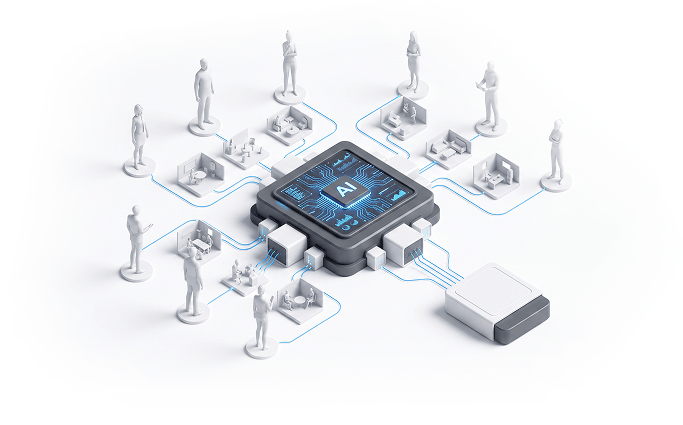
We design human-like AI personas for dialogue scenarios across messengers, web and mobile platforms, internal systems, training environments, research tools and interactive products.
Each persona is an agentic system: identity, professional or social role and speech behaviour; experience, knowledge and three-layer memory; relationships, goals and decision logic; Behavioral Contract, permitted actions and development history. It analyses every message for semantic, pragmatic, object, event and behavioural signals, then updates its structured state.
The next response reflects who the persona is, what it remembers, how it views the interlocutor and what its goals and rules allow. The architecture supports sustained, nonlinear and personalised interactions rather than asking a chatbot to act as a role through one system prompt.

Why does a prompt- defined persona lose coherence?
- Role and tone instructions may hold briefly but cannot govern memory across sessions
- Unstructured dialogue cannot reliably resolve objects, relationships or state changes
- Competing goals and actions require explicit priorities and completion rules
- Storing only the latest response makes behaviour difficult to evaluate or explain
estimated monthly visits across 110 personalised AI platforms

of human self-consistency achieved by agents based on 1,052 interviews
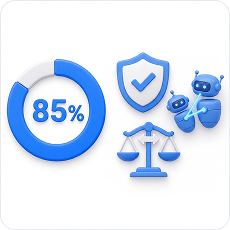
of tasks potentially affected when LLMs are combined with tools
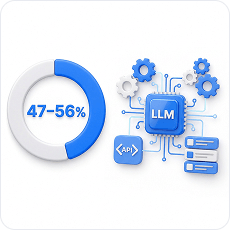
of enterprise applications forecast to include agentic AI by 2028, from less than 1% in 2024

How the system turns dialogue into coherent persona behaviour
Each message becomes structured state, evaluated against identity, memory, goals and behavioural rules before any response or action.
Message Extraction
The base configuration analyses 150+ semantic, pragmatic, object, event and behavioural parameters. These include speech acts and intent, emotion and confidence, trust and the product-specific interest zone. Each can update memory, goals, rules or actions.
Identity Core & object model
Biography, profession and competencies; values, communication style and risk attitude; decision logic, goals, contradictions and knowledge boundaries define the persona. Interlocutors and entities retain identifiers, properties and relationships, state history and confidence.
Three-layer memory
Short-term memory holds the active exchange; medium-term memory connects episodes and sessions; deep memory preserves stable experience, views and relationships. Rules govern retrieval, consolidation, priority, forgetting and updates.
Behavioral Contract
Extracted signals, identity and memory, relationships, active goals and environment determine mandatory and conditional reactions; priorities and state transitions; action calls and completion conditions.
Goal Core & Action System
The Goal Core resolves priorities, conflicts, required data and completion across concurrent goals. The Action System permits, requires, sets conditions for or blocks dialogue moves and document generation; API calls and object updates; tasks and scenario completion.
Message in. Coherent response and action out
The system links the dialogue environment and client infrastructure. It normalises user, session and message data, context and channel metadata. APIs and connectors return persona responses, state changes, structured results and permitted actions.
CLIENT INPUTS
Messages, history & channel metadata
Environment, interlocutors & available objects
External events, knowledge & permitted actions
SYNTHETIC PERSONA SYSTEM
Message extraction & interest zone
Identity, users & object state
Three-layer memory & retrieval
Behavioral Contract & relationships
Goals, decisions & permitted actions
Response, tool calls & analytical trace
Business outputs
Persona response, speech act & dialogue state
Selected goal, decision & confidence values
Memory, relationship & object updates
Actions, tool calls, structured results & analytical events
One architecture. Different human roles
The architecture serves product and sales, customer experience and learning, research, brand and interactive teams. Every role has a distinct identity, memory, goals and actions.
BUSINESS & TRAINING VIEW
Customer simulation
model needs, knowledge and experience; objections, risk attitudes and product history to test consultations, interfaces and communication
Negotiation partner
represent interests, constraints, alternatives and agreement conditions in nonlinear negotiations
Employee roleplay
practise with clients, sceptics, experts, managers, partners and nonstandard interlocutors who respond to the trainee
Sales & customer experience
compare communication scenarios across client types before live use
Product & UX validation
test dialogue interfaces, user journeys, archetype reactions, questions and product logic
RESEARCH & INTERACTIVE VIEW
Research interviews
pre-test questions, possible responses and interview structure while surfacing additional hypotheses
Digital brand representatives
preserve character, knowledge and interaction history across messengers, web products and interactive content
Professional roles
model consultants, experts and managers; customers, interviewers and candidates; mentors, workgroup participants and specialists
Interactive characters
support roleplay, virtual spaces, games and narratives in which characters remember events
Reusable persona portfolio
run independent personas with distinct identities, memories, goals and contracts on shared infrastructure
Model the
decision. Not just
the tone
A prompt persona can imitate a communication style. Synthetic Persona Systems select responses or actions using identity and memory, relationships and active goals, object state and the current environment. They preserve the resulting state for later interactions.
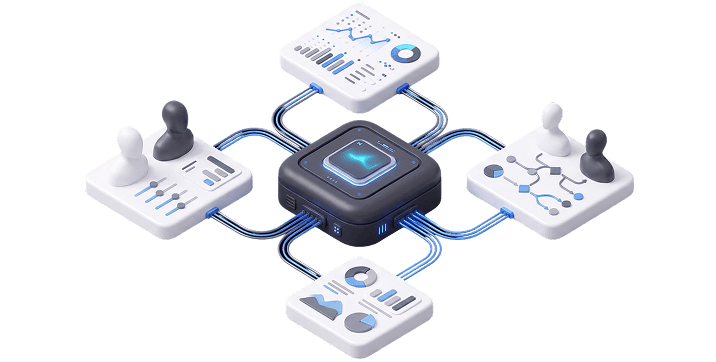
What can change the response to the same question
- The user previously broke an agreement, reducing the persona’s trust
- The topic recalls a significant experience stored in deep memory
- Uncertain information requires clarification before a confident answer
- The active goal makes missing data more important than an immediate response
- New evidence updates an object and changes the persona’s position
- A required action or completion condition moves the scenario forward
We configure Synthetic Persona Systems around your environment
Configuration reflects role depth, memory retention and dialogue duration; object and relationship models; action permissions, evaluation, integrations and available client infrastructure.
Client-controlled deployment
Relevant components can run within client-controlled infrastructure, increasing control over data handling, access, configuration, storage, integrations and operation. Security and compliance still depend on the controls implemented.
Governed tools & actions
The Action System and Behavioral Contract govern API calls and data retrieval; updates and messages; tasks and completion actions, defining what is permitted, mandatory, conditional or unavailable.
Channel & knowledge integration
APIs and connectors can link Telegram, WhatsApp and Meta platforms; web chat and mobile apps; learning and research environments; CRM, knowledge bases and storage; dashboards and internal or custom web systems.
What you receive
- Configured synthetic persona and role-specific Identity Core
- 150+ parameter Message Extraction, interest-zone logic and user/object modelling
- Three-layer memory with consolidation, retrieval, forgetting and updates
- Behavioral Contract, Goal Core, Action System and output schema
- Historical database, analytical trace and evaluation set
- Channel connectors, pilot configuration, documentation and evolution plan
How we build a Synthetic Persona System for a specific role
Implementation moves from role definition to identity, memory, behaviour, integration, evaluation and controlled evolution.
01
Define
Specify the role, scenarios and environment; interlocutors, tasks and outcome; actions, simulation depth and quality criteria.
02
Collect
Study historical dialogues, interviews and role profiles; behavioural and speech materials; knowledge bases, previous interactions and prototypes for a composite archetype.
03
Extract
Define speech parameters, objects and speech acts; state changes, interest zones and relevant behaviour-driving data.
04
Model
Build the Identity Core and user/object model for biography, competencies and values; communication, decisions and knowledge; relationships and changing states.
05
Remember
Set short-, medium- and deep-memory rules for persistence and consolidation; priority and retrieval; forgetting and updates.
06
Govern
Create the Behavioral Contract, goal priorities and completion conditions; permitted actions and tool rules; environment changes and output schema.
07
Integrate & evaluate
Connect channels, knowledge, storage, APIs and analytics. Test identity, memory and role alignment; speech and contradictions; goals, actions and repeated interactions.
08
Pilot & evolve
Pilot the selected persona, environment and scenarios using real, historical and purpose-built dialogues. Then version identity, memory and knowledge; contracts and actions.

Questions before
deployment
Here are the questions our clients ask us most often
How is this different from an ordinary chatbot or prompt persona?
A prompt can establish a temporary role and tone. Synthetic Persona Systems maintain structured identity, memory, relationships, goals, decision rules and permitted actions across longer interactions.
Can the persona remember a user between conversations?
Yes, when persistent user identification and authorised history storage are available. Short-, medium- and deep-memory layers connect the current exchange, previous episodes and stable experience.
Can the persona change its opinion or relationship with a user?
Yes. New information, experience, relationship changes, actions and outcomes can update its position and influence subsequent decisions.
Can it use internal knowledge and perform actions?
Yes. Permitted APIs and tools can retrieve approved knowledge, update objects, create documents or tasks, send messages and return structured results under the Action System and Behavioral Contract.
Can the system model several personas?
Yes. Shared infrastructure can support independent personas with different identities, memories, goals and contracts. Interaction among many personas and group dynamics belongs to Synthetic Audience Simulation.
How is simulation quality evaluated?
Evaluation can test identity, memory and role alignment; relationships, speech and contradictions; goals and actions; long dialogues and consistency across repeated sessions.
Product consultation
Need an AI persona
that stays coherent
after the first few
messages?
that stays coherent
after the first few
messages?
We will define the role, build the Identity Core, three-layer memory, Behavioral Contract, Goal Core and Action System, then integrate the persona into the required dialogue environment.